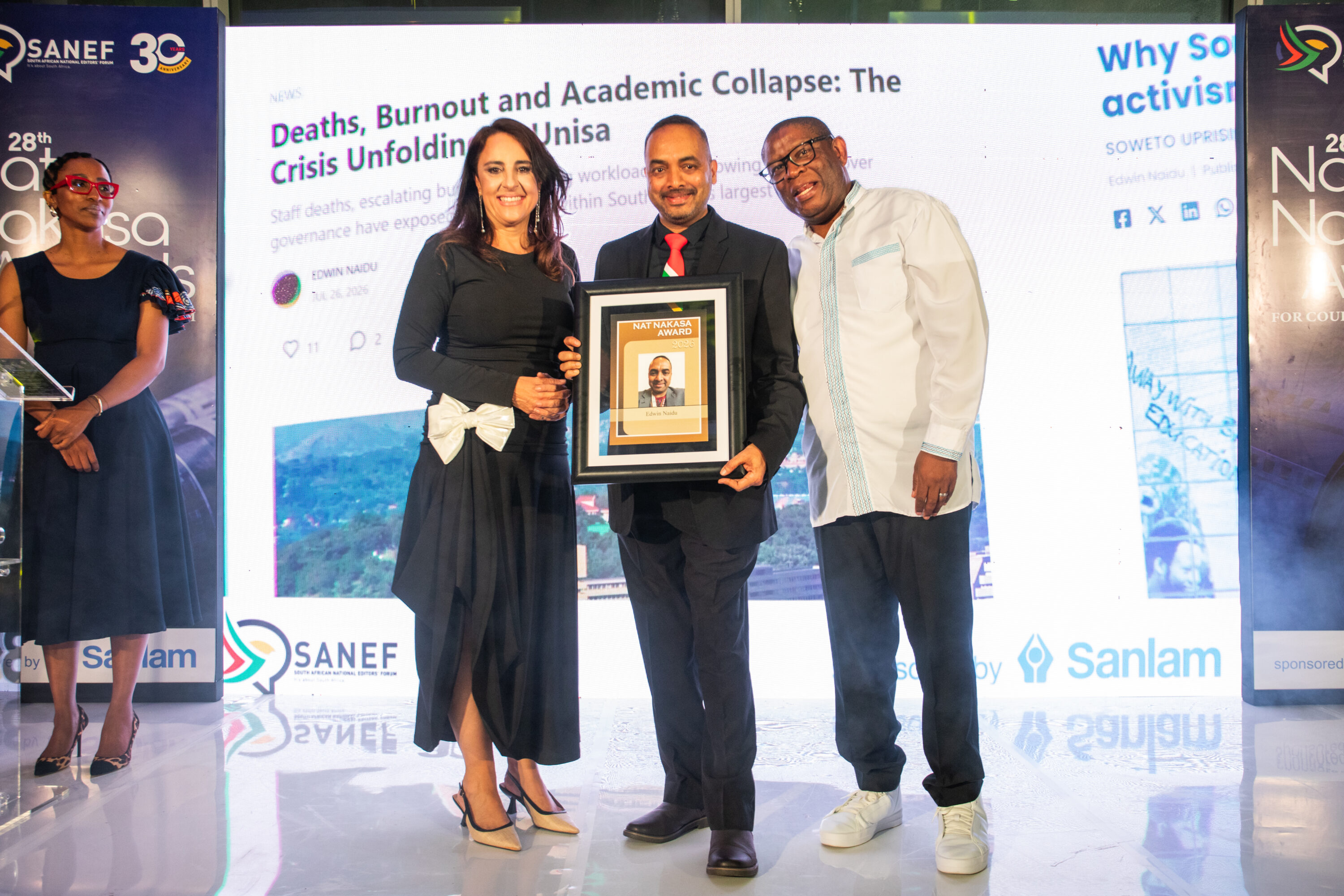
Ednews.Africa editor Edwin Naidu has received the 2026 Nat Nakasa Award for courageous journalism after his series on alleged corruption and administrative failures at the University of South Africa.
The award honours the legacy of Nat Nakasa, the acclaimed South African journalist and Nieman Fellow who championed fearless, independent journalism under apartheid and was held in mid-September.
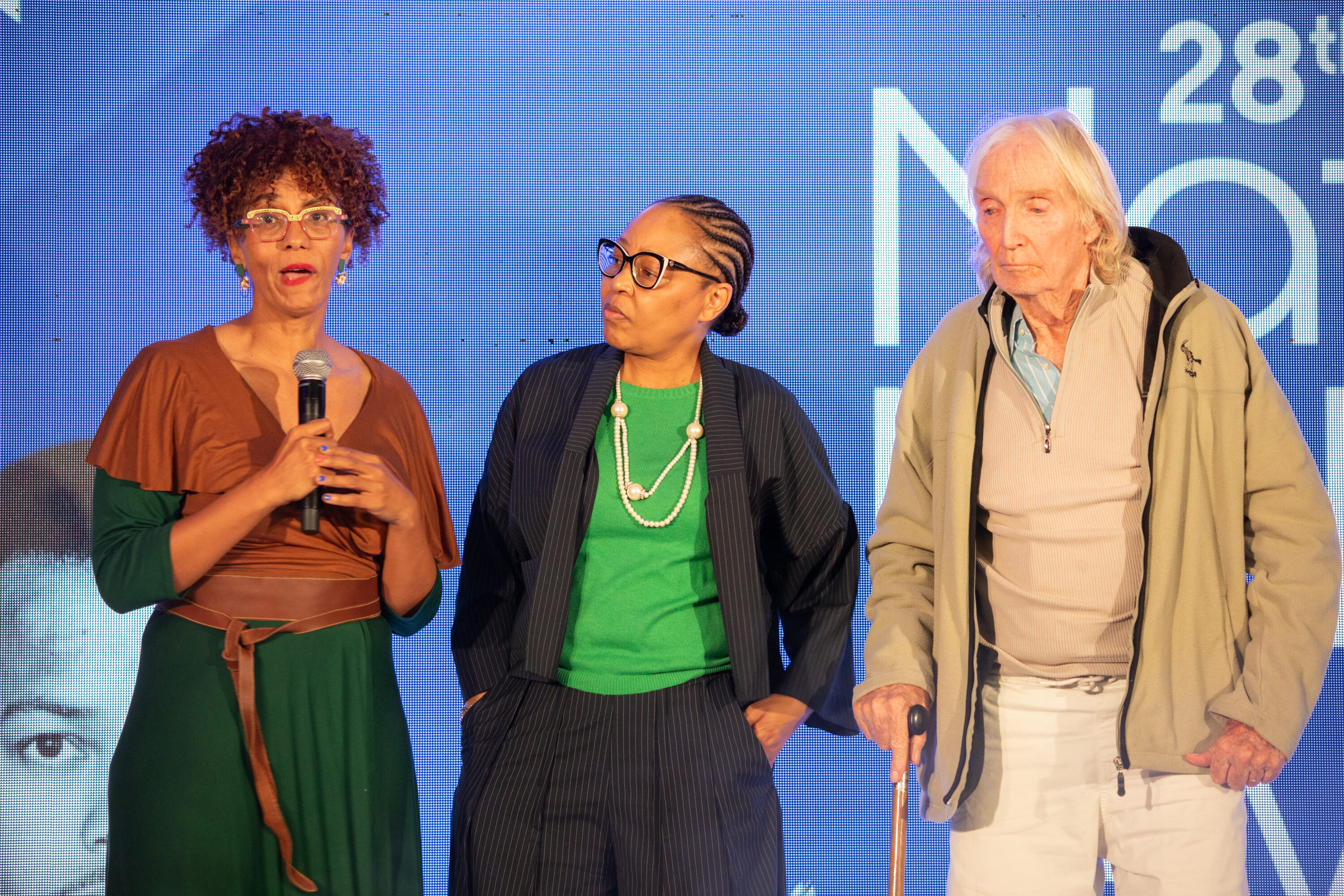
The judging panel, Peter Sullivan, Moipone Malefane, and Crystal Orderson, said Naidu’s work had “consistently served the public interest with integrity, courage and independence”.
They said he had shown “the fearless commitment to truth that the Nat Nakasa Award was created to honour”.
For Naidu, recognition is not the end of hard work: “I think it’s more, for me, it was like a call to action to say, the work is not over, there’s so much to do.”
Naidu’s path in journalism began when he was a teenager when he was given the opportunity to start a music column titled ‘Edwin Naidu Pop Column’ at a local newspaper.
Naidu joined the Sunday Tribune in 1989 and later moved to Johannesburg to work at The Star.
His interest in education journalism deepened after studying at Oxford in 1995 and 1996, where he examined how the media could contribute to education coverage in South Africa.
His education and focus eventually led him to establishing ednews.Africa to address what he saw as a lack of in-depth reporting on education.
“What I felt was missing actually was the lack of deep coverage of education issues,” he said.
Naidu now wants ednews.Africa to grow beyond South Africa and create space for more voices across the African continent.
“I’d like ednews.Africa to really make its mark on the African continent,” Naidu said. “I’d like to bring in more voices.”
Despite receiving the Nat Nakasa Award, Naidu a journalist’s focus should be on [2] meaningful stories.
“Journalism is not about awards. It’s not about chasing awards, it’s about chasing stories that mean something to our readers across the board,” he said.
Naidu said responsible journalism means covering the good and the bad when reporting on powerful institutions, including verifying information carefully and providing those institutions an opportunity to respond.
“You’ve got to give them a chance to comment,” he said. “It’s always important to confirm what that source is saying with someone else or someone else, so that you’re not taking one person’s story against an institution.”
Protecting his sources is just as important, especially when speaking to journalists puts sources at risk of bad consequences.
“When you’re writing, especially from people who come to you with trust and they want to be anonymous because they can’t go to the university, you can’t betray the trust that they have in you,” Naidu said.
It’s the 30th year of the Nat Nakasa Award for Media Integrity since its inception in 1998. While traditionally given to a single individual or media worker each year, recent ceremonies (such as 2024 and 2026) have featured joint main winners and additional community media categories, bringing the total number of individual honors awarded past the number of event years.
(Entries for the award usually open in June every year, but more details can be found on the SANEFwebsite.)
Just dropping the specific date because this is more a ‘spoke about what it means’ kind of story rather than ‘this happened’ kind of story.
He repeats the awards angle in the quote, try decrease repetition.


