
Online misogyny has become one of the biggest barriers facing South African women in journalism, according to SANEF’s latest report
By Lerato Pooe
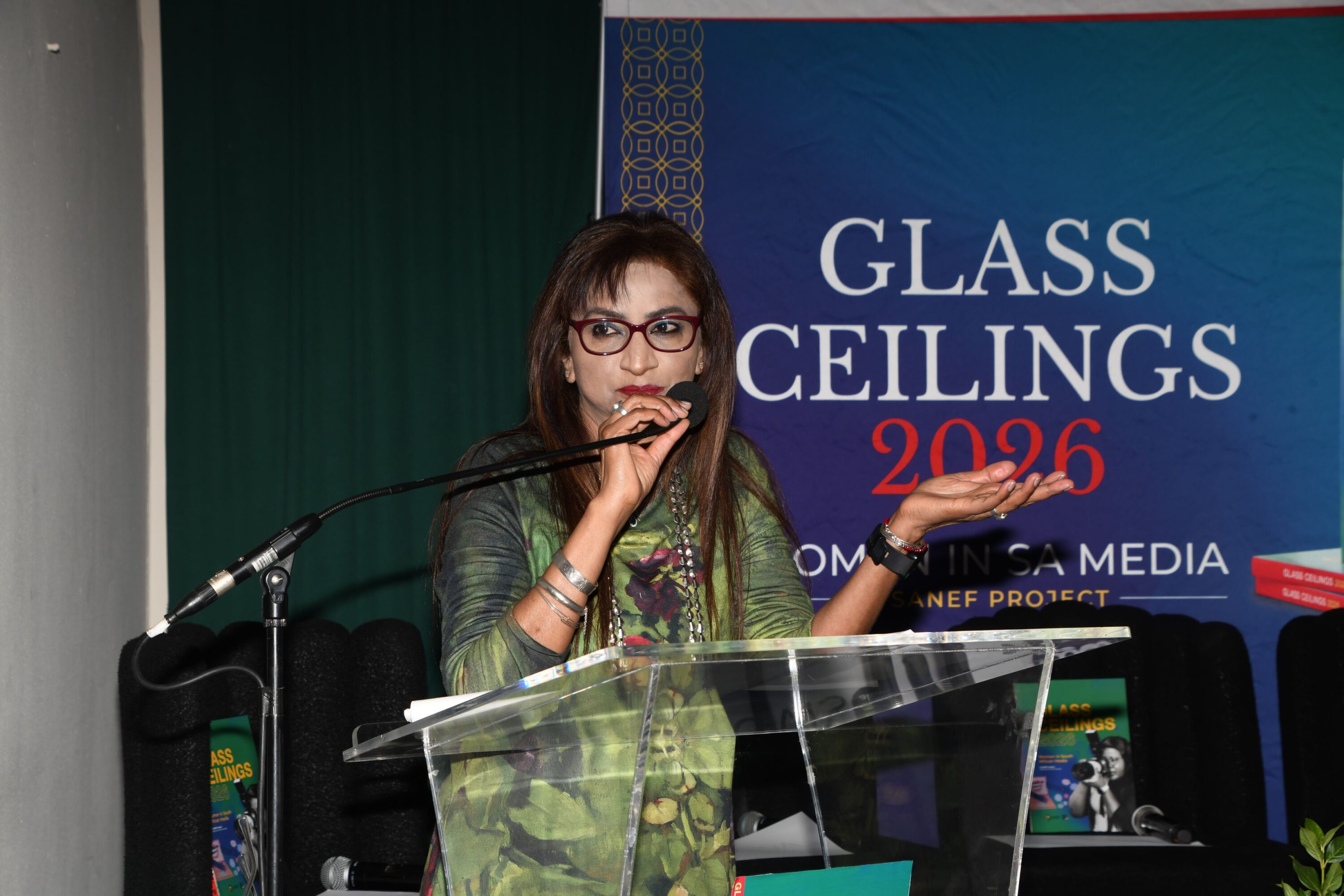
As the South African National Editors’ Forum (SANEF) marks its 30th anniversary, the launch of Glass Ceilings 2026 at Emoyeni in Johannesburg on 6 August highlights a troubling new barrier confronting women in the media: the “cyber ceiling”.
The latest publication in the 20-year research project tracking women’s advancement into media leadership confirms that online harassment and cyber misogyny – absent from the inaugural 2006 study and identified only as an emerging trend in 2018 – have become an entrenched reality for many women working in South African media.
The editor of Glass Ceilings 2026: Women in South African Media, Wits University Media Studies Professor Glenda Daniels, who is also SANEF’s secretary-general, says one of the key findings is that the glass ceiling has morphed.
“So, it’s gone from a glass ceiling to a cyber ceiling, meaning that a lot of women have left journalism because they find it very difficult to cope with what’s going on on social media … the online misogyny,” says Daniels.
Daniels explains that the quality of journalism is affected when women are unable to participate fully in the media. “You have a half-hearted, lukewarm democracy. If there’s no diversity, there cannot be democracy,” she says, citing the importance of plurality and diversity.
The report reveals that 75% of the 111 women surveyed listed cyber misogyny — the online hatred of women — as the biggest barrier to progress in the media. Although the bullying happens online, it affects women’s participation in the newsroom.
More than 60% of respondents believe there is a gender pay gap in their organisations, with many saying they earn less than male colleagues with the same experience and qualifications.
According to Daniels, the increasing backlash against women is reversing some of the progress made towards gender equality. “There were more women editors, maybe 10 years ago, compared to now,” she says.
The book also highlights the intersection of race and gender in the media. Bongekile Macupe, writing about why Black African women are leaving newsrooms, notes that they report feeling humiliated, overlooked and sidelined. Macupe explains that the boys’ club is now an African boys’ club, from which women often seek protection but do not receive it. This points to the specific intersection of racial and gender discrimination experienced by Black African women.
Some respondents perceived the existence of an “Old Girls’ Network” and suggested that some senior women occasionally reinforce male-dominated power structures. However, they also noted that even women who are part of these leadership networks remain vulnerable to online abuse and harassment.
Daniels describes social media as “shark-infested waters” because of how dangerous and predatory it can be for vulnerable people, especially women.
“They’re just sharks there, trying to look for the vulnerable. And they’re seeing women as vulnerable because we are afraid of being raped and threatened with murder. So they – the misogynists – go for that,” she says.
Beyond documenting the scale of online abuse, Glass Ceilings 2026 argues that women in journalism need stronger legal and institutional protection. Although South African law and the Constitution protect citizens and address harassment and cybercrime, the report finds that platform accountability, institutional support and enforcement remain insufficient.
The book also raises concerns about Strategic Lawsuits Against Public Participation, or SLAPP suits — legal actions intended to intimidate or silence critics through costly litigation. Although survey respondents believe these lawsuits are not aimed only at women, the report finds that women often experience greater reputational and financial consequences, making it more difficult for them to continue speaking publicly.
Daniels says raising public awareness about what is happening is the first critical step in tackling these challenges.
“People don’t know unless you write about it and publicise it,” she says.
She also calls for big tech companies, government and civil society to collaborate in pushing back against these threats. Change, she says, will require stakeholders to hold digital platforms accountable and demand that technology companies take responsibility for the harm enabled through their platforms.
Glass Ceilings 2026: Women in South African Media is available for purchase from the SANEF office.