
For decades, South Africa has been celebrated as a beacon of press freedom on the African continent. Backed by robust constitutional guarantees—most notably Sections 16 and 32—journalists in this country have exposed institutional corruption, held corporate titans to account, and brought state capture to light. However, constitutional guarantees alone no longer provide an absolute shield. Today, South African media faces an unprecedented convergence of legal harassment, regulatory loopholes, economic precarity, and digital warfare.
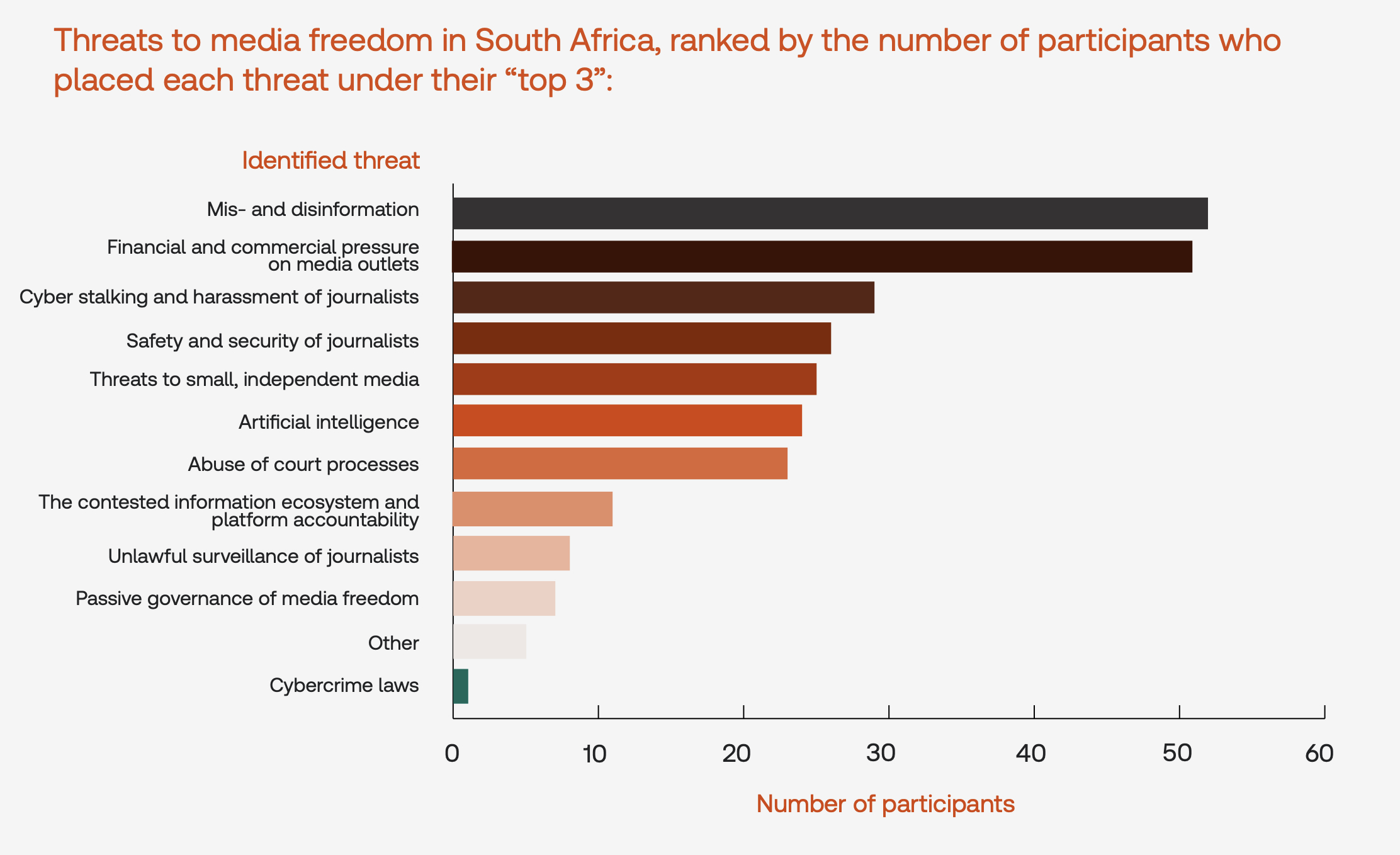
A comprehensive recent report, Weaponising the Law: Threats to Media Freedom in South Africa, paints a sobering picture of our current landscape: 50 percent of surveyed journalists in South Africa have faced legal threats directly linked to their reporting.
Censorship in the modern era rarely arrives in the form of direct state bans or seized printing presses. Instead, it operates through the slow, systematic weaponisation of the legal system, administrative stonewalling, and financial exhaustion.
Here is an in-depth breakdown of the primary pressure points currently undermining investigative journalism and media sustainability in South Africa.
1. The Weaponisation of Court Processes
The misuse of judicial mechanisms to silence reporters and drain newsroom resources has reached critical levels.
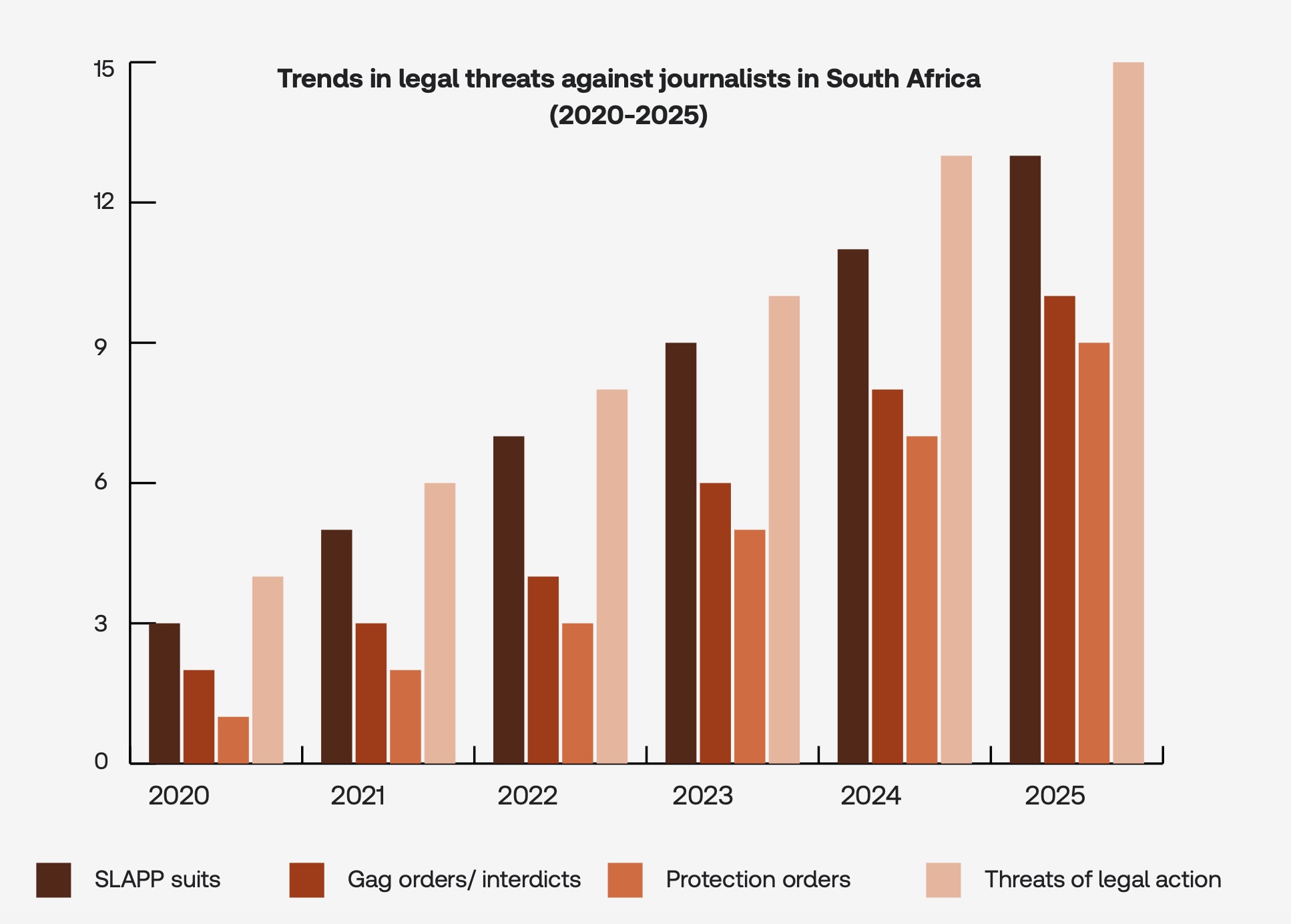
- Prior Restraints and Gag Orders: Newsrooms face an increasing volume of urgent interdicts aimed at blocking publication before an article even hits the press. While the legal threshold for prior restraint is exceptionally high, inconsistent application in courts of first instance creates severe chilling effects and forces costly emergency litigation.
- SLAPP Suits and Exorbitant Defamation Claims: Strategic Lawsuits Against Public Participation (SLAPP suits) are increasingly deployed by powerful public and private actors. Claiming astronomical damages, these suits are designed not to win on legal merits, but to intimidate journalists, exhaust newsroom funds, and force smaller outlets or freelancers to abandon public-interest stories.
- Abuse of Protection Orders: Litigants are turning to the Protection from Harassment Act to obtain urgent protection orders against reporters. This mechanism is routinely abused to evade legitimate questions, block investigative reporting, or justify refusing to engage with journalists.
- Misuse of POPIA to Block Transparency: While the Protection of Personal Information Act (POPIA) includes explicit statutory exemptions for journalistic processing, public and private entities routinely invoke the Act as a pretext to withhold or delay public-interest information.
2. Legislative Deficits and Regulatory Impediments
Where laws ought to facilitate transparency and protect sources, legislative gaps and statutory delays leave journalists vulnerable.
- Systemic Failures of PAIA: The Promotion of Access to Information Act (PAIA) should be an essential tool for investigative journalism. In practice, journalists encounter pervasive non-compliance, unpunished statutory delays, poor record-keeping, and arbitrary refusals by state bodies, rendering the process functionally broken for fast-moving news cycles.
- Surveillance and Unchecked Interception: Delays in fully reforming the Regulation of Interception of Communications and Provision of Communication-Related Information Act (RICA), combined with the misuse of Section 205 of the Criminal Procedure Act, leave reporters susceptible to state surveillance. Unchecked communications monitoring places confidential journalistic sources at grave risk.
- The Cybercrimes Act and Whistleblower Vulnerabilities: The Cybercrimes Act currently lacks an explicit public-interest override or whistleblower exemption. As a result, journalists handling leaked digital materials face potential criminalisation. Compounding this, South Africa’s weak whistleblower protections discourage sources from coming forward, knowing they lack adequate legal cover.
- Financial Oversight Compliance: Increased regulatory and anti-money laundering compliance burdens (aligning with FATF standards) place disproportionate operational burdens on non-profit investigative hubs, diverting scarce funding away from reporting and into compliance management.
3. Technology-Facilitated Harms and Digital Abuse
The digital sphere has become a key battleground where credibility is systematically undermined and individual reporters are targeted.
- Coordinated Online Harassment: Targeted, misogynistic, and racialised abuse campaigns are routinely launched against journalists who cover political corruption, state entities, or high-profile corporate figures. Female journalists and marginalized groups bear the brunt of this violence.
- Lack of Platform Accountability: Global tech platforms (including X, Meta, and YouTube) continue to operate with a severe lack of localized content moderation. Response times to targeted harassment or coordinated disinformation campaigns targeting journalists remain dangerously inadequate.
- Algorithmic Disinformation: Opacity in social media algorithms fosters echo chambers that amplify engineered disinformation, forcing newsrooms to spend vast time and capital debunking falsehoods while public trust in news institutions is actively eroded.
4. Labour Precarity and Long-Term Sustainability
Legal and digital pressures are compounding an already fragile economic foundation within the media industry.
- Shrinking Newsrooms and Precarious Contracts: Declining traditional ad revenue and industry downsizing have led to widespread newsroom closures, retrenchments, and overwork. A growing portion of the industry now relies on freelancers who lack minimum pay standards, contract security, health benefits, or legal defense buffers.
- Mental Health and Burnout: The combination of financial insecurity, intense workloads, and relentless digital harassment has created a mental health crisis within the profession, leading to severe burnout and talent drain.
- Uncompensated AI Exploitation: Generative AI developers routinely scrape public-interest journalism to train commercial models without licensing agreements or compensation. This uncompensated exploitation poses a existential threat to the financial sustainability of original reporting.
The Path Forward: Imperatives for Reform
Defending media freedom requires concrete, institutional remedies rather than passive statements of support. Moving forward, meaningful reform must prioritize:
- Anti-SLAPP Legislation & Judicial Safeguards: Enacting dedicated anti-SLAPP statutes, updating court rules to swiftly dismiss abusive litigation, and holding legal practitioners accountable for bad-faith tactics.
- Legislative Modernisation: Amending RICA to explicitly protect journalistic sources, inserting public-interest overrides into the Cybercrimes Act, and overhauling whistleblower legislation to protect sources who disclose information to the press.
- Enforcement on Transparency: Empowering the Information Regulator to impose real penalties on public bodies that willfully delay or obstruct PAIA requests.
- Platform & Industry Accountability: Forcing major digital platforms to establish local moderation teams and fast-track reporting hotlines for journalist harassment, while establishing industry-wide protections and fair compensation models for gig-economy reporters and AI usage.
A free press cannot survive on history and constitutional promises alone. Without legislative protection, structural accountability, and sustainable economic models, the vital watchdog role of South Africa’s media remains under serious threat.