
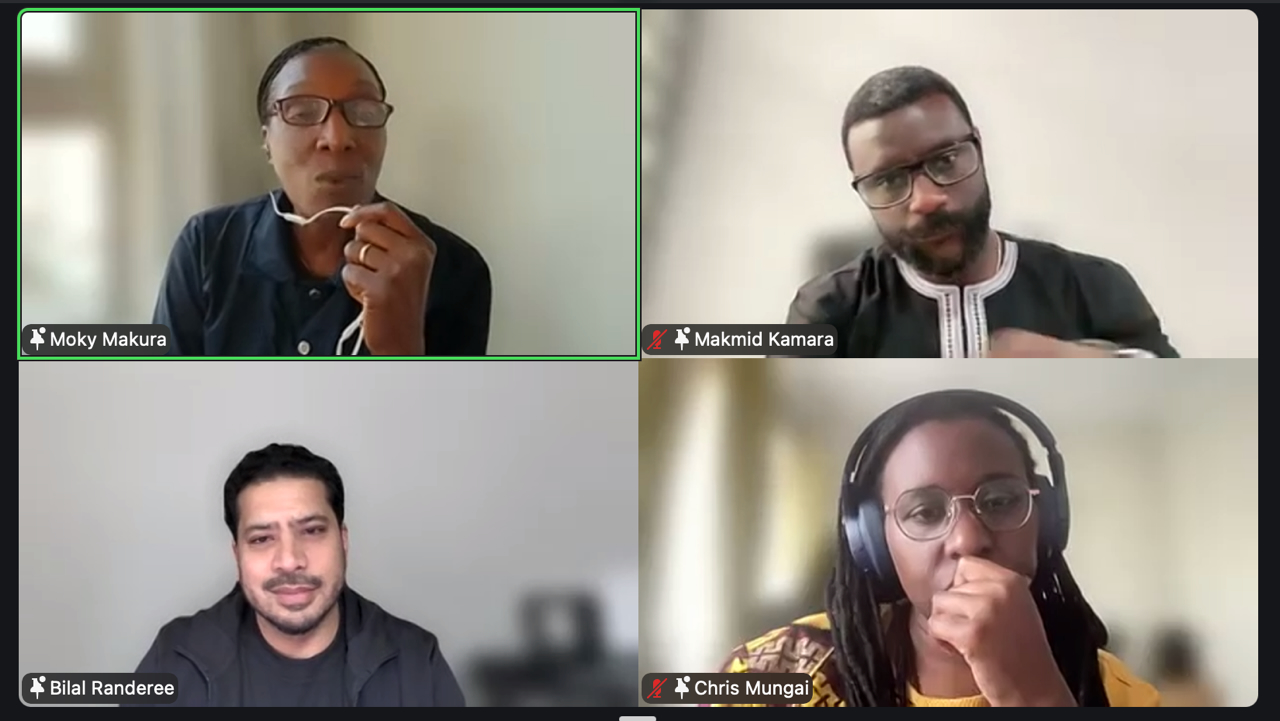
African newsrooms need funding that covers the core cost of reporting while protecting their editorial freedom to decide what to cover, panelists said at a bird story agency Publisher Briefing on Thursday, 19 November.
Moderated by Moky Makura, executive director of Africa No Filter, the online discussion brought together Christine Mungai, editor-in-chief of The Continent; Makmid Kamara, Africa and Middle East regional director at the International Fund for Public Interest Media (IFPIM); and Bilal Randeree, chief programme officer at the Media Development Investment Fund (MDIF). Together, they explored how newsrooms can balance flexible grants, commercial investment, and live events while keeping journalism freely accessible.
Live events and diversified philanthropy
The Continent reaches readers primarily through WhatsApp and email. Mungai explained that putting up a paywall would make it harder for readers to share editions within their own networks, while processing cross-border payments across multiple African countries for a WhatsApp-first publication presents major practical hurdles.
Instead, the newspaper plans to keep its digital editions free and is developing a traveling live journalism show in African cities where readership data shows a strong following. Alongside ticketed or sponsored live events, the outlet is exploring merchandise sales—including original illustrations from its editions—to generate revenue.
Currently, The Continent relies heavily on philanthropy from multiple funders. Mungai noted that one donor accounting for roughly a third of its budget withdrew committed funding in 2025 amid cuts to US foreign aid, before later returning.
“It may seem simple and easy and less work to just pitch one big ticket to one big funder,” Mungai said, adding that managing several smaller funding relationships requires more effort but gives the publication greater resilience.
Asked how The Continent protects its editorial independence when partnering with funders, Mungai pointed to Borderlands, a series produced with the African Union and Germany’s development agency, GIZ. While the partners were focused on freedom of movement across Africa, the newsroom already wanted to report on what borders mean for the communities living alongside them.
“We are genuinely doing the stories that we want to do,” Mungai said. “And when there’s overlap and when there’s partnership, that’s really amazing.”
Grants that cover core newsroom costs
Kamara emphasized that flexible grants—which cover essentials like salaries, rent, and equipment rather than just specific editorial projects—are vital for keeping newsrooms operational. He cited a South African broadcaster that had been forced off the air for extended periods during power cuts; IFPIM approved a request to redirect part of its grant toward backup power infrastructure so the station could stay on air.
He also pointed to JoyNews in Ghana, part of the Multimedia Group, as an example of an outlet needing operating support even within a commercial media conglomerate. Although advertising revenue from sister stations helped subsidize JoyNews, the newsroom still struggled to fund field reporting, prompting IFPIM to provide a general operating grant.
Preparing for commercial investment
For outlets looking beyond philanthropy, Randeree noted that while some public-service journalism cannot survive on commercial revenue alone, publishers seeking loans or equity must demonstrate enough commercial traction to repay debt or generate a return. He urged newsrooms to maintain reliable financial accounts and audit their recurring costs while funding is still flowing—rather than waiting until a grant expires or a revenue stream dries up.


