
A community radio station in Sierra Leone was struggling to stay on air when a politician bought it a transmitter and generator. According to Makmid Kamara of the International Fund for Public Interest Media, the station would then broadcast when the politician was nearby, giving him long stretches at the microphone without independent questioning.
The account points to a danger that technology alone cannot solve: when independent journalism cannot afford to survive, those with money and political power can shape what the public hears. At a UN General Assembly Side event in New York held on 25 September, African speakers argued that protecting information integrity means keeping journalism independent and viable.
The discussion followed the launch of the UN Global Principles for Information Integrity in June 2024, which called for governments to guarantee a “free, viable, independent and plural media landscape” and strong protections for journalists.
As Ghana’s deputy minister of social security Laura Raisanen put it, the aim is a trusted, inclusive information ecosystem that empowers every citizen. Speaking on the eve of World News Day, she said: “A resilient society is not only built through institutions and infrastructure; it is also built through informed and engaged citizens.”
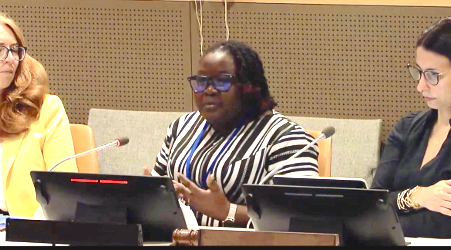
Ghana’s Acting Director of the Information Services Department, Dr Winnifred Nafisa Mahama, described information integrity as a collective effort involving government, media, civil society, and communities. “Ghana’s response to information integrity is founded on cooperation rather than the government doing it alone,” she said.
A major part of Ghana’s approach is media and information literacy, aimed at helping citizens distinguish credible information from misinformation, disinformation, and AI-generated content. “Media and information literacy brought information closer to citizens while enabling them to identify misinformation, disinformation and deepfakes before sharing or acting on such content,” said Mahama.
Mahama believes the issue goes beyond technology because reliable information is necessary for meaningful participation in society. “Information integrity is central to trust, democracy and development because citizens depend on reliable information to participate meaningfully in public life,” she said.
Ghana’s response includes training information officers at district and community level, while initiatives such as local-language communication, WhatsApp distribution and the Caravan of Hope seek to take information literacy closer to communities.
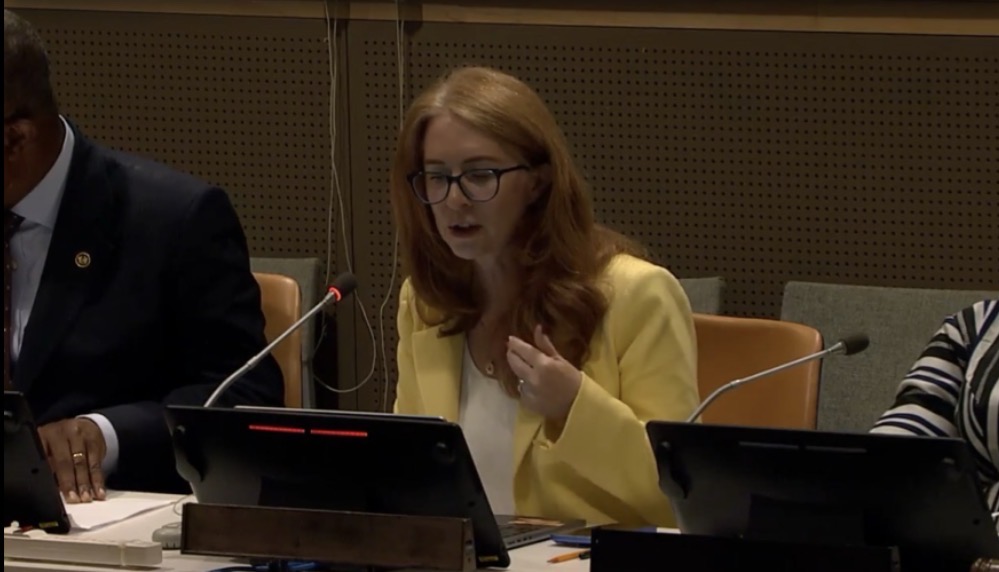
For Jody Ginsberg, chief executive of the Committee to Protect Journalists (CPJ), the challenge is not simply the existence of false information, but how quickly it can travel. “It is …the speed at which it can spread, and how fast and deep that mis- and disinformation goes,” Ginsberg said.
The pressure on journalism extends beyond the digital environment. CPJ recorded 129 journalists and media workers killed worldwide in 2025, the highest annual number since the organisation began documenting such deaths in 1992. At least 104 were killed in conflict settings, while CPJ documented 47 targeted killings linked to journalists’ work.
Ginsberg said attacks on journalists weaken the wider information environment by making it harder for the public to access credible reporting.
“Attacks on the media are a leading indicator of attacks on other freedoms, and much more needs to be done to prevent these killings and punish the perpetrators. We are all at risk when journalists are killed for reporting the news,” she said.
Funding journalism accuracy
Panelists also described concrete initiatives across Africa. In Sierra Leone, a newly established public-interest media fund (championed by IFPIM and local NGOs) is subsidising independent outlets. In the Sahel, a network of community radio stations known as Studio Kalangu works with civil society to fact-check rumor-plagued zones. And a recent forum called “Afro Frequency” was announced to let African editors share tech tools and combat tactics. Funding played a significant role in the conversation. Too many outlets lack sustainable revenue, leaving them susceptible to takeover by propaganda. Participants urged donors and governments to invest in local journalism.
Against this backdrop, African speakers used the discussion to highlight responses being developed on the continent rather than presenting Africa only as a victim of information disorder. The speakers also identified actions they want governments, civil society, industry and media organisations to take over the next 12 months.
Ginsberg called for governments, civil society and industry to pay, invest, protect, promote and punish. She specifically called for an end to impunity for crimes against journalists and support for an independent investigative body into crimes against journalists.
Deputy Co-Chair of the High-Level Panel of Legal Experts on Media Freedom, Catherine Amirfar called for domestic legal frameworks to be brought in line with international human rights standards and best practices, while balancing content controls with a pluralistic society and media freedom.
Mahama called for African innovations to be scaled up, stronger media literacy and the use of AI in ways that serve information integrity rather than manipulation.
As Kamara put it: “The solutions are there. I think that’s one thing we need to be mindful of. It is about how we open those solutions and scale them.”


