
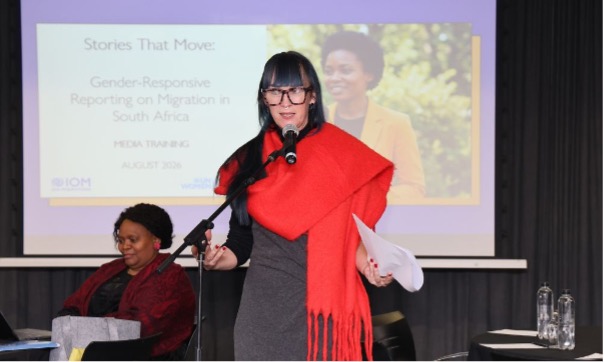
Women make up nearly half of the 281 million international migrants and 42% of migrant workers globally. Yet the experiences of migrant women remain largely under-represented in media coverage, with stories often shaped by misinformation, sensationalism, and incomplete narratives.
By Someleze Ndede
Journalists gathered in Cape Town from 17-18 August for a two-day media training to strengthen reporting on gender and immigration under the banner ‘The Stories that Move: Gender-responsive reporting on immigration in South Africa’ training brought together journalists, editors, migrant women leaders, United Nations agencies, and civil society representatives.
Opening the day, UN Women South Africa Multi-Country Representative Aleta Miller said the stories journalists tell have consequences beyond the newsroom.
“Today, we come together because stories matter.”
“Migration reporting,” she said, “can shape public attitudes, influence policy debates, and affect the daily lives of millions. It can build understanding and social cohesion but can also deepen stereotypes and divisions.”
Miller said migrant women are particularly vulnerable to being reduced to stories of victimhood but acknowledged that many do experience discrimination, violence, and barriers to opportunity. But she also said they are workers, entrepreneurs, carers, leaders, and agents of change.
“To report on migration and gender responsibly is therefore not a technical skill alone,” she stressed “It is to carry forward a tradition of women who insisted that the fullest, most human version of the story be told and who understood that doing so safely must never be optional.”
Data should support, and not replace, the human experience
Yvonne Ndege
The training explored ethical and trauma-informed reporting, gender and migration, intersectionality, misinformation, digital risks, and the role of journalists in challenging harmful narratives. Participants also engaged directly with migrant women and examined how their voices can be better represented in the media.
International Organization for Migration regional communications head Yvonne Ndege led sessions on data-driven storytelling. A former journalist, Ndege encouraged reporters to use data to provide context, establish scale, and strengthen the credibility of their stories while retaining the human element.
“Data should support, and not replace, the human experience,” she said.
She also urged journalists to be transparent about the limitations of data and avoid sensationalism, cherry-picking, and what she called ‘overclaiming’ which is exaggerating the facts. Data, she argued, can help reporters verify claims and explain patterns that might otherwise remain anecdotal or open to misinterpretation.
The training moved from theory into practice during Session 9: Editorial Clinic, facilitated by Maphuti Mahlaba of UN Women. Using a “Read. Question. Reframe.” approach, participants critically assessed news stories, examining whose voices were present or absent, how migrant women were represented, and the language and assumptions shaping the coverage. They also identified missing context and data, as well as three strengths and three changes needed to make each story more gender-responsive.
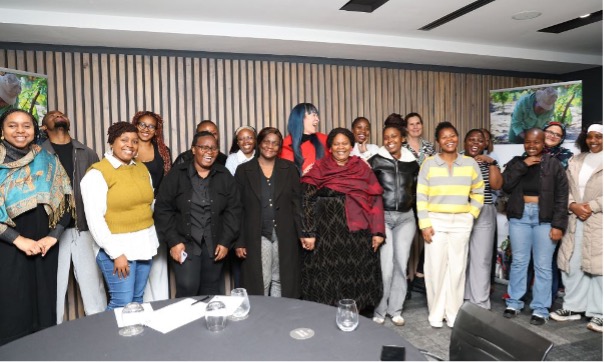
Among the changes identified was the need to include the voices of women in articles about them, rather than allowing others to speak for them. Participants also stressed that women should not be victimised or reduced to their experiences of vulnerability. A third change was to scrutinise language, including questioning labels such as “female leader” when simply describing someone as “a leader” would avoid unnecessarily gendering the role.
The Story Lab and Participant Action Plans session was facilitated by Siziwe Jongizulu of UN Women who then challenged participants to put lessons into action. They developed original gender-responsive migration story pitches, identifying the angle, voices to centre, supporting evidence, framing and human story before pitching their ideas to the room.
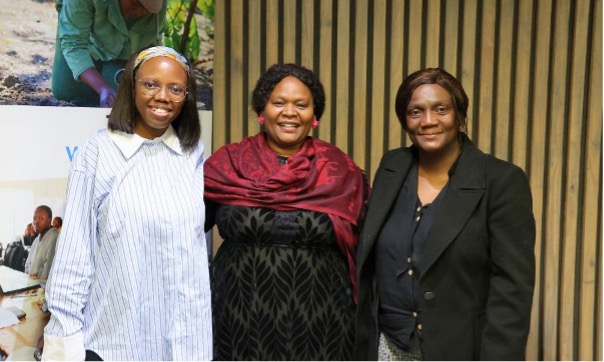
Miller’s closing message captured the purpose of the exercise: “Together, let us tell stories that move people, stories that inform, stories that challenge stereotypes, and stories that uphold the dignity and rights of migrant women.”


